
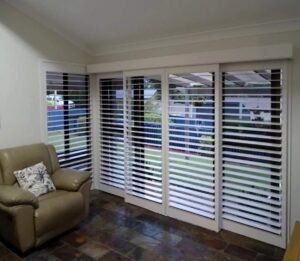
A glass door lights up a room and shows it off to the whole street at the same time. Plantation shutters for sliding doors sort that out, one louvre tilt at a time, and the door itself keeps working.
Key Takeaways:
- Plantation shutters for sliding doors let the light in and keep the neighbours out.
- Tilt the louvres a little and the glare goes.
- A breeze still finds its way through closed panels.
- Need the whole doorway? The panels slide out of the road.
- Cheap blinds date a room. Timber holds up.
Nothing else in a house has as much glass as the sliding door, and once the sun goes down that glass works against the people inside. Plantation shutters for sliding doors hand the choice back to the homeowner. Daylight when it suits. A screened room when it does not. Same door, same view, no audience.
Curtains across three metres of glass? There goes the garden, along with the glare. Vertical blinds just tangle in the track. Fitting plantation shutters for sliding doors gets around the whole mess, since the panels slide or fold clear and every blade tilts to whatever angle the moment calls for. Renovators tend to do the glass doors first for exactly that reason.
The Display Window Nobody Ordered
- After Dark the Glass Switches Sides: Walk past any suburban street after sunset and the unscreened glass doors glow like shopfronts. Everything inside is on show, the sofa, the telly, the people. Frosted film fixes the privacy and kills the view. Curtains do the job at night then smother the light all day.
- Shutters Split the Difference: Adjustable louvres change the equation. Tilt the blades upward and light bounces off the ceiling while the sightline from outside closes completely. Tilt them level for the garden view. The room stays bright either way, because light keeps passing between the blades even when nobody outside can see a thing.
Louvres That Move With the Sun
- Glare Control Without the Cave Effect: Western sun through a sliding door can wash out a television screen and heat a room within an hour. Closing curtains fixes the glare and darkens everything. Louvres angled a few degrees cut the direct beam and leave soft, usable light behind. The afternoon stays comfortable without a single lamp switched on.
- Ventilation Keeps Working: Queensland evenings are made for an open door and a sea breeze. With the panels closed and the blades tilted, air moves freely through the opening while the house stays screened from the footpath. A frameless shutter design keeps the opening clean too, with no bulky surround eating into the glass.
Everyday Living, Not Just Show Days
- Morning to Midnight Flexibility: Shutters on a glass door earn their keep across a whole day, not just when guests arrive. Blades sit wide open for breakfast, drop to half for the harsh midday stretch, then close fully once the lights come on. No cords, no stuck rollers, just a fingertip on the blade.
- Where the Difference Shows:
- Privacy after dark without giving up the daytime view.
- Glare drops while the room stays naturally lit.
- Breezes pass through tilted blades on warm nights.
- Panels slide clear whenever the full opening is needed.
- Summer heat load drops, so the air con works less.
- No Track Underfoot: Overhead track systems carry the panels, which bypass one another instead of stacking in the way. The floor stays bare. No channel down there to trap sand, dog hair or a toddler’s toast crust. Wide panels mean fewer joins across the glass, which keeps the outlook open when everything sits flat.
The Cost of Getting It Wrong
- Cheap Coverings Age in Public: A sliding door is the most looked-at opening in the house, inside and out. Flimsy vertical blinds crack, tangle and date a room fast. Coastal sun is brutal on cheap plastics, which yellow and grow chalky within a few years. Whatever covers that glass gets judged every single day, by everyone.
- Timber Holds Its Value: Engineered timber shutters treat the door as a permanent fixture rather than a furnishing. The blades stay straight, the finish can be repainted years later in any new colour, and the whole installation reads as part of the architecture. Buyers notice that at inspection time. Dated blinds get replaced, shutters get counted.
Brighter Rooms Without the Trade-Off
Glass doors were meant to open a home up, not to hand away its privacy or roast its lounge room every afternoon. Shutters with tilting louvres put that balance back in the homeowner’s hands, one small adjustment at a time. Anyone weighing up options for a glass door should request a made-to-measure quote and see the numbers first.